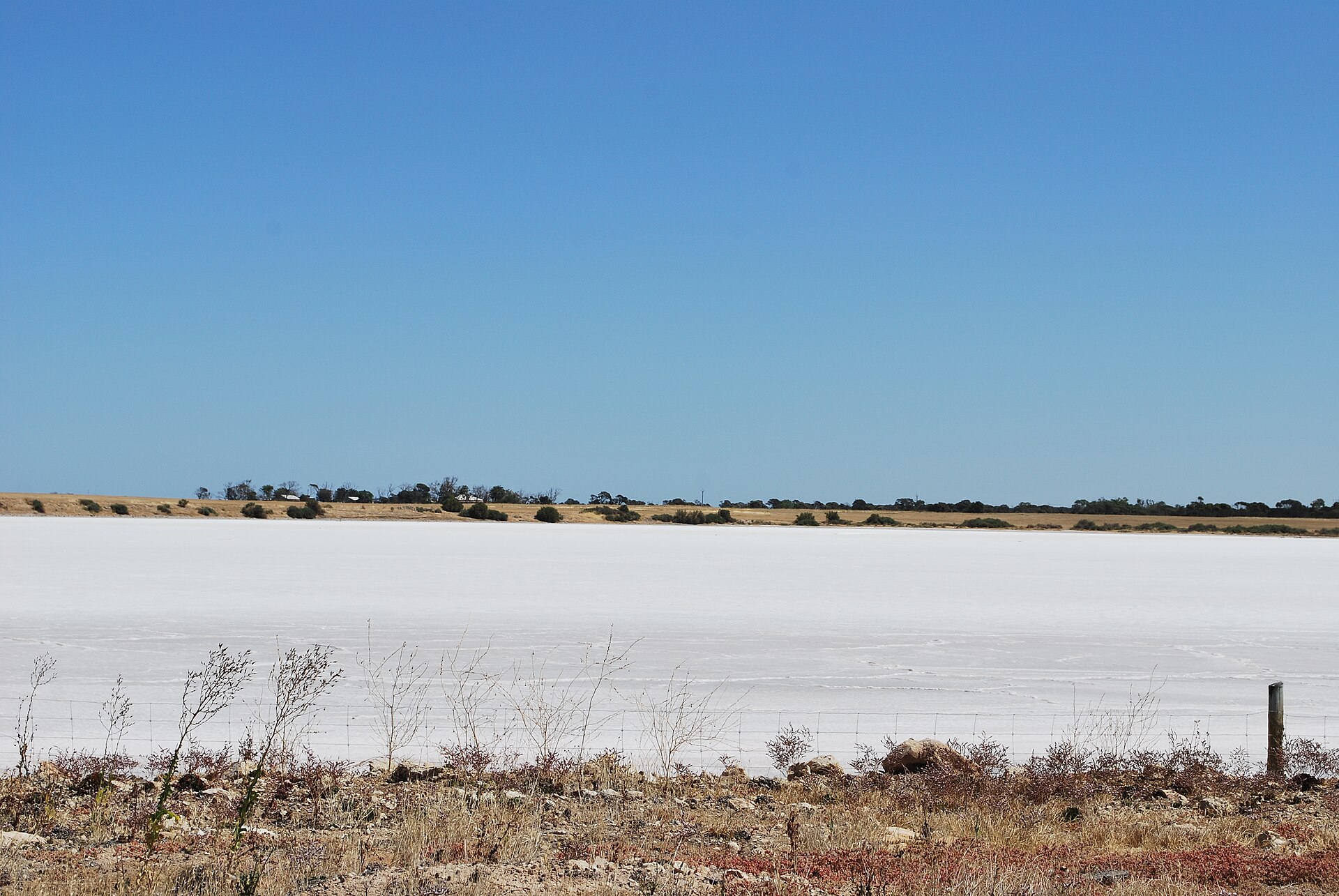
Yorketown Salt Lakes
A scatter of pink and white salt lakes ringing Yorketown, a striking feature of the southern peninsula.
Yorketown sits at the centre of a remarkable cluster of more than a hundred small salt lakes that pock the southern Yorke Peninsula. Many blush pink in summer, ringing the town with patches of rose and white that make the drive in unexpectedly beautiful. Salt was harvested commercially here for decades, and the lakes remain a defining feature of the landscape.
The colour shifts with the seasons and the light — most vivid in the dry heat of summer, fading after winter rains fill and dilute the basins. Several lakes sit right beside the roads around town, easy to pull over and photograph.
They make a worthwhile pause on any loop through the lower peninsula, a reminder of the harsh, salt-rich country that shaped this part of the Yorke.
Find it on the map
Got a photo of Yorketown Salt Lakes?
Share your best shot. If we use it in the gallery, you'll be credited by name. Photos are reviewed before going live.
Last verified 1 hour ago
You might also like
Similar experiences across Yorke Peninsula
Yorketown Salt Lakes — frequently asked questions
Why are the salt lakes around Yorketown pink?
The lakes can turn vivid pink due to high salinity, which favours pink-pigmented microorganisms. Their colour shifts between white, pink and blue depending on salt content and the season.
How many salt lakes surround Yorketown?
Yorketown is ringed by around 200 salt lakes, making it the heart of the Yorke Peninsula Salt Lake Trail through the southern peninsula.
Was salt mined from the Yorketown lakes?
Yes. Salt harvesting at Yorketown began around 1891 and peaked during the First World War, with tens of thousands of tonnes farmed in a year before the industry wound down by the 1950s.
Image credits
- YorketownSaltLake.JPG by Mattinbgn , CC BY-SA 3.0 via Wikimedia Commons